Myth vs. Fact: The Deep Difference Between Loneliness and Being Alone
Understand why physical proximity doesn't always heal inner emptiness, and discover how to turn moments alone into a powerful source of self-knowledge and peace.
Read the transcript
Narrator You check your calendar, and it is completely full. You have meetings, lunches, and dozens of messages on your phone.
Narrator On the outside, your social life looks perfect. But on the inside, you have never felt so far away from everyone.
Narrator Today we follow Emma through a busy weekend. We will explore the deep difference between being alone and feeling lonely, and learn how to find comfort in our own company.
Narrator Friday night. Emma and her brother Ben are having dinner with a large group of friends. The table is loud and full of laughter.
Ben You've been checking your phone a lot tonight. Are you waiting for an important message?
Emma Not really. I just feel a bit out of place. My mind keeps wandering.
Ben Out of place? You organized this dinner. You've been talking to everyone for two hours.
Emma I know. I'm talking, I'm smiling, but I feel like I'm watching the dinner from the outside.
Ben Maybe you're just tired. You said yes to three different plans this week. You never stop.
Emma If I stay home, I feel like I'm missing out. But when I'm here, I feel completely invisible. Like no one really sees me.
Narrator Emma is surrounded by people who care about her. Yet, a heavy emotional emptiness takes over her chest.
Narrator Later that night, Emma arrives home. She closes the door, and the sudden silence feels deafening.
The inner voice It's too quiet in here. Turn on the television. Call someone. Don't just stand there.
Emma I just want to rest.
The inner voice If you sit alone on a Friday night, something is wrong with your social life. Look at your phone. See what everyone else is doing.
Narrator Emma opens her social media. She sees photos of people smiling, traveling, and living seemingly perfect moments. The loneliness stings even harder.
Emma Everyone is so happy. Why do I feel so empty when my life is full of people?
Narrator From a very early age, society teaches us to dread silence. We learn to associate the idea of being alone with abandonment or failure.
Narrator But physical isolation and emotional emptiness are two entirely different things. Being alone is a purely physical and neutral state. It is just the absence of other people in the room.
Narrator Loneliness is an emotional pain. It happens when our intimate needs for connection are not being met. You can share a busy Sunday lunch with your whole family and still feel a sharp loneliness.
Emma Because I'm not really connecting with anyone. I'm just playing a role to please them.
Narrator Exactly. When we wear masks to be accepted, our true self remains isolated. Loneliness is an evolutionary signal, just like hunger or thirst.
Narrator It is a warning light telling us we need meaningful connections. And no amount of shallow small talk or casual acquaintances can cure it.
Narrator In the digital age, we have tools to communicate with anyone in seconds. We are technologically hyperconnected, yet deeply malnourished of real intimacy.
Narrator We trade prolonged eye contact and physical presence for emojis and short text messages. This diet of fragmented interactions creates a dangerous illusion of closeness.
The inner voice But you talked to five friends today online. You're connected. You have a great support network.
Emma Am I? I know what they had for lunch, but I have no idea how they really feel. And they don't know how I feel either.
Narrator Comparison is the thief of joy. When we compare our messy reality with everyone else's bright highlight reels, we only dig the trench of our own loneliness deeper.
Narrator If loneliness is the pain of feeling disconnected, solitude is the glory of feeling connected with yourself. Cultivating intentional solitude is a powerful way to care for your mental health.
Narrator You can start small. Schedule a date with yourself.
Emma Just me. No phone, no television, no rushing. Just sitting here.
Narrator Put the phone in another room. Find a comfortable chair by the window. Notice the sounds outside.
Emma It feels uncomfortable at first. My mind wants to run back to the noise.
Narrator That is normal. When the noise stops, you finally start listening to your own voice. You can process the emotions you swallowed throughout the week, without anyone else's judgment.
Narrator Ask yourself gently: what are your thoughts trying to tell you when you finally stop running?
Narrator Saturday morning. Emma meets Ben for coffee. This time, she leaves her phone in her bag.
Ben You look different today. More rested. Did you sleep well?
Emma I spent the morning reading a book in silence. I didn't text anyone. I didn't check my feeds at all.
Ben Just you and the quiet? Wasn't it strange to not have plans?
Emma It was at first. But then it felt like a sacred refuge. I think I've been saying yes to every invitation just to run away from myself.
Ben You don't have to be busy to be loved, Emma. We love you anyway.
Emma I know that now. Next time we hang out, I want it to be because I really want to see you. Not because I'm afraid of a quiet house.
Narrator The ability to enjoy your own company makes you a much more secure person. When you no longer fear being alone, your standard for relationships naturally rises.
Narrator You stop settling for superficial ties, and you begin to seek connections that truly nourish your soul.
Narrator If you want to explore your relationship with yourself, the Confidey app is a safe place to practice. The full article is on the Confidey blog, and we hope to see you next time.
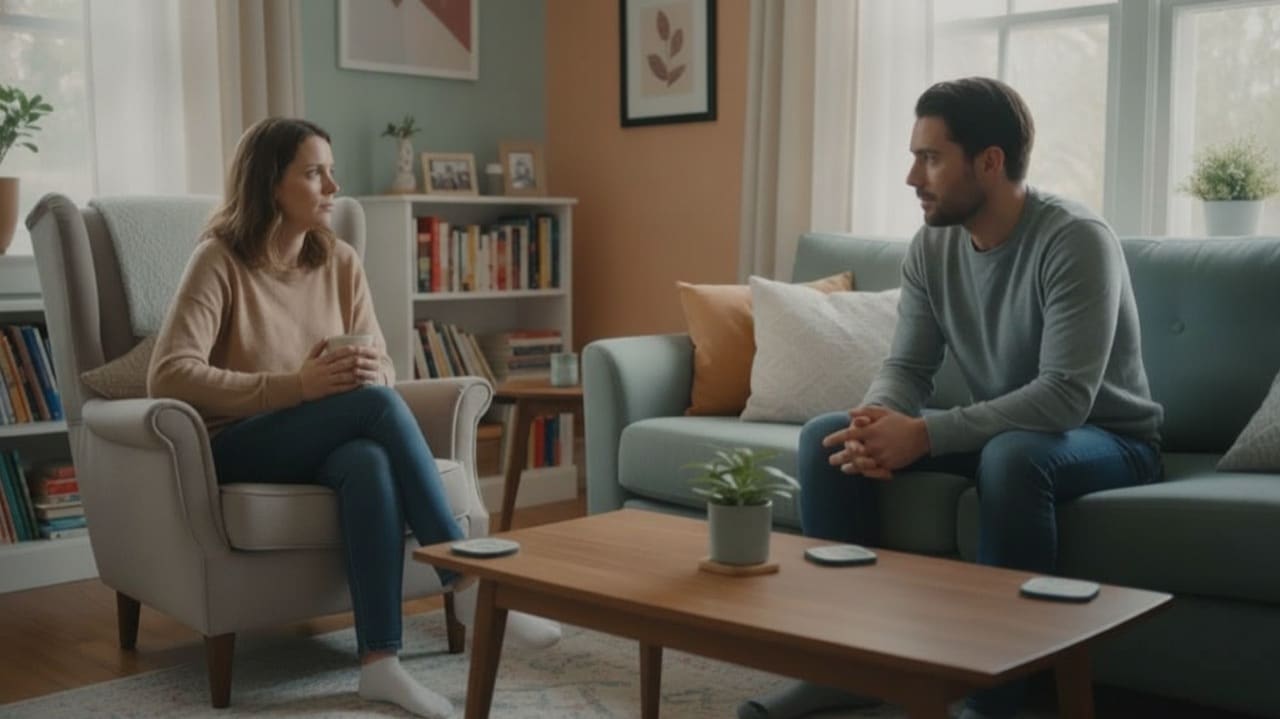
Emma’s story is far more common than we think. While navigating a busy weekend with her supportive brother, Ben, she found herself dealing with deep emotional isolation. Even in his caring presence, the inner voice constantly heightened her anxiety and echoed societal pressure, suggesting that she was inadequate for feeling so disconnected. When she finally stepped into a quiet room by herself, she decided to stop running and embraced honest self-connection. In that peaceful silence, Emma learned to find genuine comfort in solitude, realizing that being alone did not mean being empty, but being entirely whole.
This duality illustrates one of the greatest conflicts of our time. The true turning point for our mental health and well-being happens when we understand that physical isolation and emotional emptiness are two entirely different phenomena. We live in a society that constantly applauds extroversion and has taught us to dread silence. As a result, we rush from one commitment to another, pack our calendars, and fill our screens with superficial interactions—all in the hope of warding off a phantom we don't fully understand.
Have you ever stopped to think whether your emotional fatigue comes from a lack of people around you, or a lack of depth in the connections you already have?
True transformation begins when we deconstruct the myth that being physically alone is synonymous with sadness. Caring for our mental health requires us to look inward and recognize our own company not as a punishment, but as a sacred refuge. Let’s dive into this deep reflection and learn how to separate the wheat from the chaff in the realm of our emotions.
The Myth of Isolation: Why Do We Fear Our Own Company?
From a very early age, we learn to associate the idea of being alone with abandonment or social inadequacy. If a child plays alone on the playground, a concerned adult quickly approaches to integrate them into the group. The myth of loneliness claims that happiness is a purely team sport and that if you don't have company for a Friday night dinner, something must be wrong with your social life. This narrative creates deep-seated anxiety around our own presence.
In an attempt to avoid being labeled as lonely, we often sacrifice our emotional balance. We say yes to invitations from friends when our bodies are crying out for rest. We engage in shallow small talk with colleagues just to fill the awkward elevator silence. This constant flight from ourselves generates a perpetual state of high alert. The fear of being alone prevents us from discovering who we are when we aren't playing a role to please others.
The truth this myth conceals is that being alone is a purely physical and neutral state. It is simply the absence of other people in the same environment. There is no emotional charge inherent to this state until our minds begin to judge it. When we manage to remove the guilt and shame associated with these moments, we make room for an incredible discovery. Being alone can be the most fertile ground for creativity, authentic rest, and processing the emotions we swallowed throughout the week.
To care for our mental health effectively, we need to rewrite this internal story. Intentional, temporary isolation is not a social failure. It is a basic human need. Just as the body needs sleep to repair its cells, the mind needs moments without external noise to organize thoughts and restore vital energy.
The Truth About Loneliness: Emptiness in the Middle of a Crowd
If being alone is a physical state, loneliness is purely emotional pain. It is the distressing perception that our intimate needs for connection are not being met. It is entirely possible (and alarmingly common) to feel a sharp loneliness while sharing a bed with a romantic partner, or during a lively Sunday lunch with your entire family. Loneliness is not the absence of people, but the absence of emotional resonance.
This pain works like a warning light on our dashboard. Just as hunger tells us we need nutrients and thirst alerts us to a lack of water, loneliness is an evolutionary signal that we need meaningful connections. The problem arises when we try to quiet this alarm with the wrong remedy. Many people try to cure loneliness by collecting more casual acquaintances, going to more parties, or accumulating likes on social media. However, quantity will never replace quality when it comes to the human heart.
How many times have you felt invisible even when someone was looking directly at you?
Loneliness stems from the feeling of not being seen, heard, or understood at our core. When we wear masks to be accepted by a friend group or in a corporate environment, we dig the trench of our own loneliness. After all, if people love and interact with a fake version of us, our true self remains isolated and starved for acceptance. This is where anxiety and stress often escalate, as maintaining this facade drains a colossal amount of psychic energy.
Acknowledging loneliness requires courage. It means admitting that some of our current relationships might be superficial or that we need to open up more to let others in. By identifying this feeling without judgment, we take the first step toward seeking connections that truly nourish the soul, rather than just filling up our schedule.
Relationships in the Digital Age: Connected, Yet Deeply Alone
Never in human history have we had so many tools to communicate with one another. With a tap on a screen, we can see the face of a relative living on the other side of the world or follow the daily routines of hundreds of peers. Yet, rates of emotional isolation have never been higher. Relationships in the digital age have brought a painful paradox for our species: we are technologically hyperconnected, yet severely malnourished of real intimacy.
Communicating through screens frequently strips away the richest elements of human connection. Tone of voice, prolonged eye contact, subtle body language, and physical touch are lost amidst emojis and short text messages. This diet of fragmented interactions creates an illusion of closeness. We think we know how a friend is doing because we saw their recent photos, but we have no idea about the silent battles they fight before going to sleep.
Furthermore, social media curated feeds display a showcase of perfect lives that amplifies our own sense of inadequacy. When we are home on a Friday night and open our phones to see everyone seemingly living incredible moments, loneliness stings harder. Comparison is the thief of joy, and in the digital era, we compare our messiest behind-the-scenes with everyone else's brightest highlight reels.
To find emotional balance in this landscape, we must establish clear boundaries. Confidey always reminds us that healthy relationships require full presence. It is vital to create moments where technology is set aside so human presence can take center stage. Exchanging dozens of surface-level messages will never replace a deep, honest twenty-minute conversation looking into the eyes of someone we care about.
The Art of Solitude: Caring for Your Mental Health in Silence
If loneliness is the pain of feeling disconnected, solitude is the glory of feeling connected with yourself. Solitude is the positive, intentional version of being alone. It is when we actively choose to step back from the noise of the world to visit our own inner universe. Cultivating solitude is one of the most transformative practices anyone can adopt to strengthen their mental health and well-being.
In solitude, we stop reacting to external stimuli and start listening to our own voice. It is the moment when we can process daily emotions without the interference of other people's opinions. When you can sit in a comfortable armchair with a cup of tea, looking out the window without needing to check your phone or turn on the TV, you are exercising the muscle of solitude. At first, the silence might feel deafening or uncomfortable, but over time, it becomes a nourishing balm.
What are your thoughts trying to tell you when you finally stop running?
The ability to enjoy your own company makes you a much more secure person in your interpersonal relationships. When you don't fear being alone, you stop settling for just any treatment simply to keep someone around. Your standard for friendships, family bonds, and partnerships naturally rises. You begin to spend time with people out of love and affinity, rather than out of need or desperation.
Transforming empty moments into enriching solitude requires intention. Schedule dates with yourself. It could be a morning walk in the park, a solo trip to the cinema, or simply thirty minutes dedicated to reading a book in silence. By treating these moments with the same respect you would give to an appointment with an important colleague, you signal to your brain that you are valuable.
Practical Mindfulness: Making Peace with Your Inner World
One of the most efficient tools for transitioning from painful loneliness to peaceful solitude is practical mindfulness. Mindfulness invites us to inhabit the present moment with curiosity and without judgment. When we feel lonely and abandoned, we are usually trapped in ruminations about the past (questioning why we were excluded) or anxious about the future (fearing we will always be alone).
Practicing mindfulness brings us back to the here and now, where mental suffering usually loses its grip. A simple yet powerful exercise is the body grounding technique. When a wave of loneliness hits hard, sit comfortably and close your eyes. Pay attention to the contact of your feet on the floor. Feel the texture of your clothes. Observe the natural rhythm of your breath—the cool air coming in and the warm air going out. By doing this, you are not running away from the feeling; you are creating a safe space within yourself to observe it.
Another aspect of practical mindfulness is welcoming your own emotions. Instead of fighting sadness or trying to mask it with distractions, try engaging in a gentle internal dialogue. Tell yourself that it is perfectly human to feel disconnected sometimes. This self-compassion breaks the cycle of guilt and drastically reduces levels of anxiety and stress.
Over time, this conscious presence rewires our brain's architecture. We begin to realize that we are not our scary thoughts, but rather the vast, quiet space in which those thoughts occur. This realization is the true key to inner peace, turning our own company into an endless source of emotional safety.
The Importance of Genuine Relationships in Our Emotional Balance
While learning to be comfortable alone is crucial, we must not forget that we are biologically and psychologically hardwired for connection. Perfect emotional balance lies in the graceful dance between the autonomy of solitude and the intimacy of genuine relationships. Building strong bonds with friends, family, and partners does not erase our independence. On the contrary, deep roots give us the security to fly.
Healthy relationships act as loving mirrors. They help us see aspects of ourselves that we couldn't spot on our own. Confidey believes that every interaction carries immense potential for learning. We help you understand your patterns because we know that trust, empathy, and vulnerability manifest in complex ways across different types of bonds.
For instance, how you communicate with a childhood friend might be completely different from how you collaborate with a project teammate. However, the common thread ensuring the quality of these connections is authenticity. To combat loneliness, we must practice nonviolent communication across all these spheres. This means expressing our needs clearly, without attacking the other person, and listening to their needs with an open heart.
Strong and healthy bonds in your relationships are not built overnight. They are the result of thousands of small moments of presence and validation. When you know you have a handful of people in the world with whom you can be entirely real, your capacity to enjoy moments alone grows exponentially. Real connection cures the fear of isolation.
Post-Pandemic Mental Health: Rediscovering the Boundaries of Our Personal Space
We cannot talk about the meaning of being alone without mentioning the recent impact on post-pandemic mental health. For a long time, the boundaries between our personal, family, and work spaces were abruptly blurred. Homes became offices and bedrooms became meeting rooms. For many, forced and uninterrupted cohabitation with family or roommates generated unprecedented exhaustion.
Curiously, this period highlighted how a lack of alone time can be just as damaging as extreme isolation. The absence of physical and temporal boundaries robbed us of the chance to miss people, to process the day during a quiet commute home, or to hold a sacred space of silence. Today, many are struggling to re-establish these boundaries without feeling guilty or appearing selfish to loved ones.
Have you been able to protect your personal space and time in today’s hyperconnected world?
Redefining our personal space is an urgent act of self-care. It might require honest conversations with those you live with, explaining that thirty minutes behind a closed door at the end of the day isn't a sign of rejection, but a necessary way to decompress. By normalizing the desire to be alone, we relieve pressure on our daily relationships, allowing them to breathe and strengthen through healthy distance.
Building Safe Bridges: From Self-Knowledge to Authentic Connection
The journey to overcoming the pain of loneliness doesn't begin with frantically searching for new people in the outside world. It starts by tidying up your internal home. Confidey acts as a guiding friend on this path. When you use our safe space for conversations, you are not just mapping out the attitudes of others—you are discovering your own behavioral patterns, emotional triggers, and deepest needs.
By completing your inner profile, you gain clarity on what truly matters to you in a friendship, a family bond, or a teamwork project. This self-knowledge acts as a compass. It prevents you from investing energy into toxic connections that would only increase your sense of loneliness in the long run.
With this solid foundation, you will be ready to nurture your connections in a much more intentional and fulfilling way. True emotional balance isn't the absence of difficult moments, but the certainty that you possess the internal resources to handle them in your own company—and the confidence that you have safe hands to hold when you decide to walk accompanied.
Distinguishing between being alone and feeling lonely ultimate gives you the freedom to choose who you want to be in the silence, and whom you want to invite to share the music of your life.
Conclusion
The difference between loneliness and being alone lies entirely in the meaning we assign to silence. While loneliness is pain stemming from deep disconnection and a lack of authentic relationships, solitude is the act of celebrating your own presence, using the space to restore the mind and care for your mental health. We’ve seen that the digital age and daily pressures make this clarity harder to reach, but intentional practices of mindfulness and self-knowledge can turn the fear of isolation into a powerful source of inner peace.
When you make peace with yourself, all your surrounding relationships—whether with friends, colleagues, or family—become richer, lighter, and more genuine. You stop seeking saviors for your voids and start looking for true companions for the journey. Emotional balance is the result of this harmony between knowing how to embrace the world and knowing how to retreat into your own heart.
Continue your journey of self-discovery with Confidey, conversations that matter, connections that transform. Discover the hidden dimensions of your emotions and build relationships grounded in trust and truth. Paradoxically, the first step to never feeling alone again is learning to hold your own hand.
Methodology & Foundations
The reflections and frameworks shared in this article are rooted in the broader science of relationships, behavioral psychology, and the field of emotional intelligence. Core concepts such as attachment theory, principles of nonviolent communication, and academic research on mental health and resilience form the foundation of Confidey's vision. Our proprietary methodology integrates this established knowledge to help map human connections multidimensionally—understanding that the quality of our interpersonal bonds and our capacity for emotional self-regulation are the scientific pillars of sustainable human well-being.
Frequently asked questions
What should I do when I feel lonely even when surrounded by people?+
This feeling suggests that your current connections may be surface-level or that you are hiding your true self. The first step is practicing self-knowledge and beginning to express your real needs vulnerably with the people you trust most.
What is the psychological difference between loneliness and solitude?+
Loneliness is a passive, painful emotion tied to a perceived lack of genuine connection and fear of abandonment. Solitude is an active, positive choice to enjoy your own company for rest, creativity, and emotional balance.
How does mindfulness help with chronic feelings of loneliness?+
Practical mindfulness helps anchor the mind in the present moment, reducing anxious thoughts about future rejection or isolation. By observing the feeling of loneliness without judging it, you strip away the extra layer of suffering and create a safe internal space of self-acceptance.
Is it normal to want to be alone and cancel plans with friends or family?+
Yes, it is completely normal and often necessary for mental health. Feeling the need to recharge your energy in silence is a sign that you are listening to your body's limits and seeking sustainable emotional balance.
Keep reading



Get more content like this
Join our newsletter. No spam.
Comments
Be the first to comment.
Continue your journey
Transform your relationships with Confidey